
Windbreak Trees: The Quiet Upgrade That Protects Your Property Year-Round
In Iowa, wind isn’t just something you feel on the way to your car—it shapes your winters, your growing season, and the way your property performs year after year. A thoughtfully planned windbreak does more than “block the breeze.” It creates a calmer space, helps manage drifting snow, and protects landscapes and buildings from the kind of exposure that quietly wears everything down.
Here at Del’s Garden Center, we’ve seen windbreak plantings transform open sites into comfortable, protected places to live and grow. One project in particular—planned carefully, planted intentionally, and diversified for long-term resilience—became a standout success and earned statewide recognition here in Iowa.
If you’ve ever thought about adding a windbreak “someday,” this is a great place to start—with a real example and a practical guide to follow…
Randy Husman’s Windbreak: Planned With Purpose (April 2024)
In April of 2024, our customer Randy Husman approached his windbreak with the mindset we love to see: clear goals, good research, and a willingness to plan it correctly from the start.
The planting was placed on his north and west exposure—the side of a property that often takes the brunt of prevailing winds and drifting snow. The purpose wasn’t just visual screening. This was designed to function as both a windbreak and a living snow fence as the planting matures.
Del’s employee Todd Sunde worked with Randy to fine-tune the plan and spacing:
“We planted on North and West exposure to help with wind break as well as snow fence. Randy chose these particular plants with research on his own as well as input from me (Todd Sunde). What I really like about this is he chose 8 different shade trees for diversification, which will minimize his loss if another pest becomes an issue for species specific trees. Randy and I worked together on placement and distance between rows as well as distance between trees.” — Todd Sunde
What stands out here is the combination of smart layout and smart diversity. Randy didn’t rely on one shade tree species—he selected eight different shade tree types, a practical way to reduce long-term risk. If a pest or disease becomes an issue for one species down the road, the overall planting stays strong and functional.
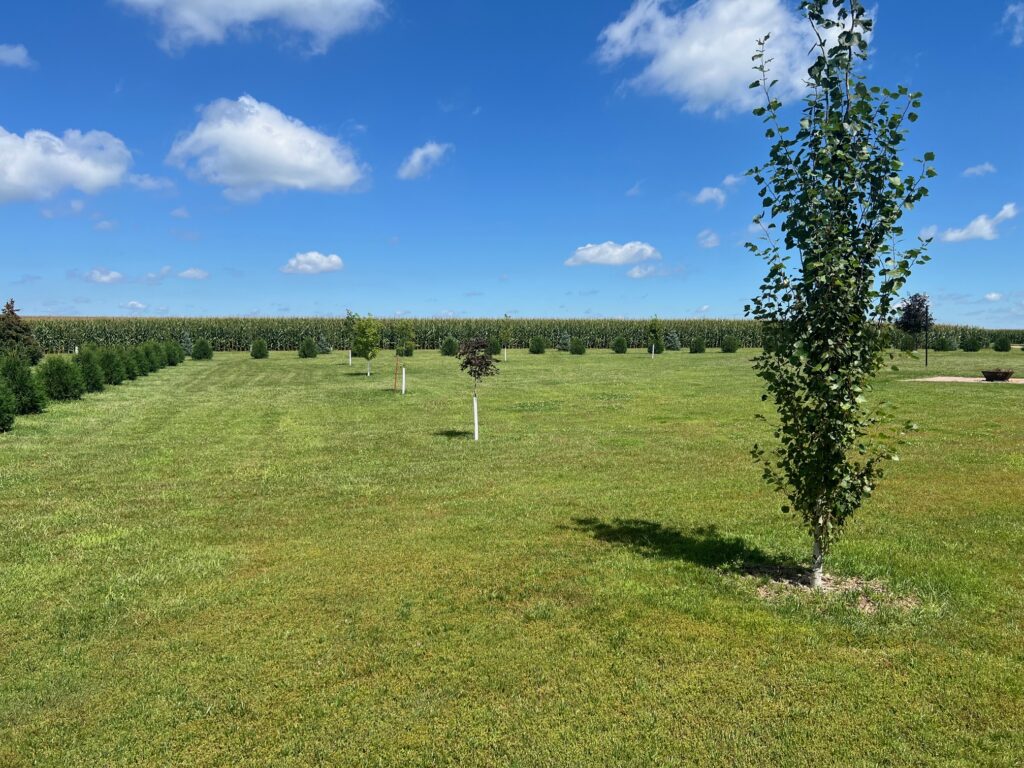
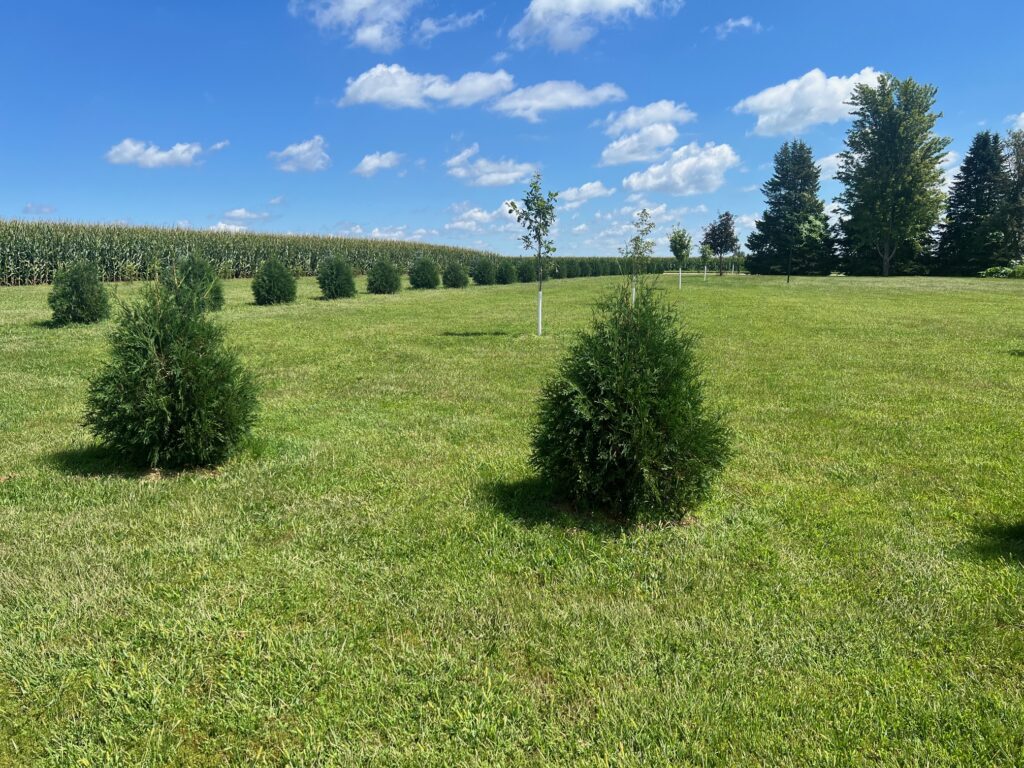
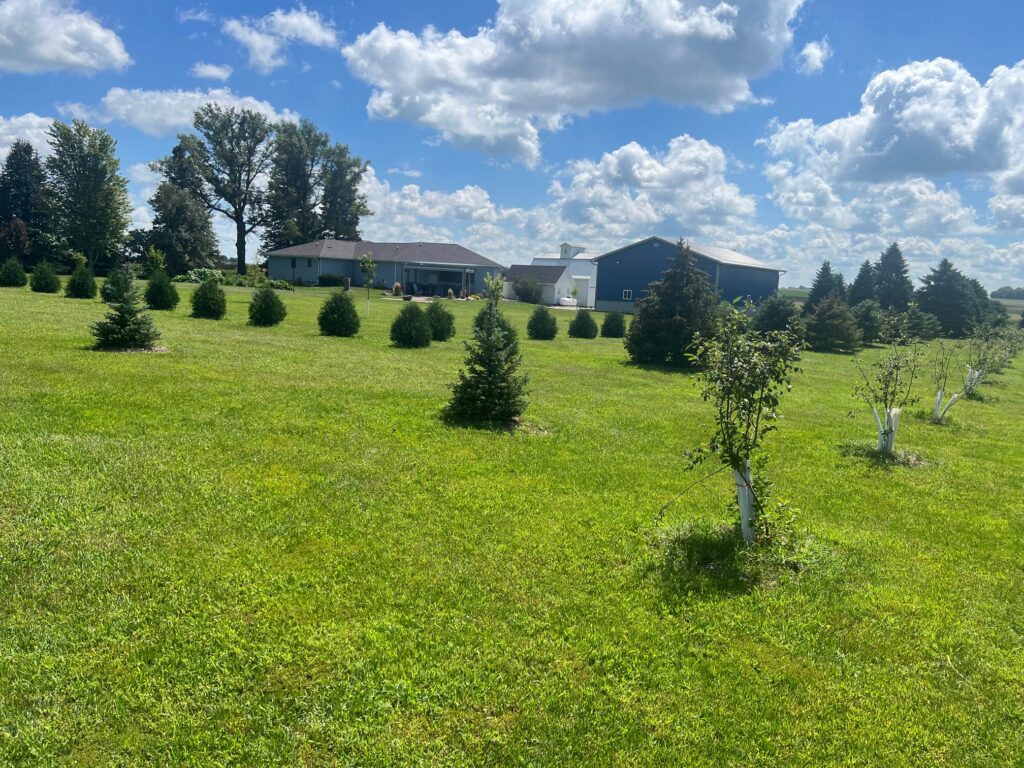
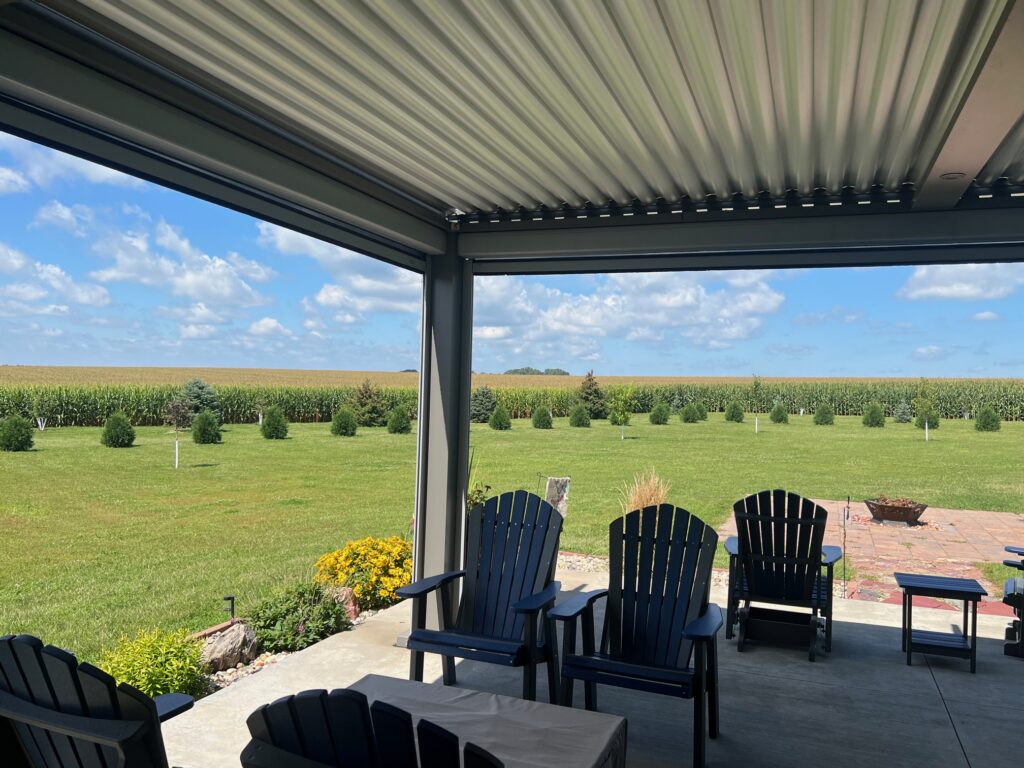
“A windbreak begins with placement: north and west exposure is often where Iowa properties benefit most.”
The “Quiet” Reason It Worked: Proper Care
Great trees and a good design set the foundation—but care is often what turns a windbreak into a success story.
The first two growing seasons matter most. Consistent watering through dry stretches, limiting weed and grass competition, and protecting young trees when needed dramatically improves survival and growth. In a planting like Randy’s, that early attention helps the windbreak establish evenly—so it performs as intended for decades, not just a season or two.
In other words: the results aren’t accidental. They’re built.
The Windbreak Award
Randy Husman’s windbreak later earned the Windbreak Award, presented by The Conservation Districts of Iowa—a meaningful recognition that reflects both a thoughtful plan and the follow-through required to establish it successfully.

What Was Planted (Randy’s Windbreak Tree List)
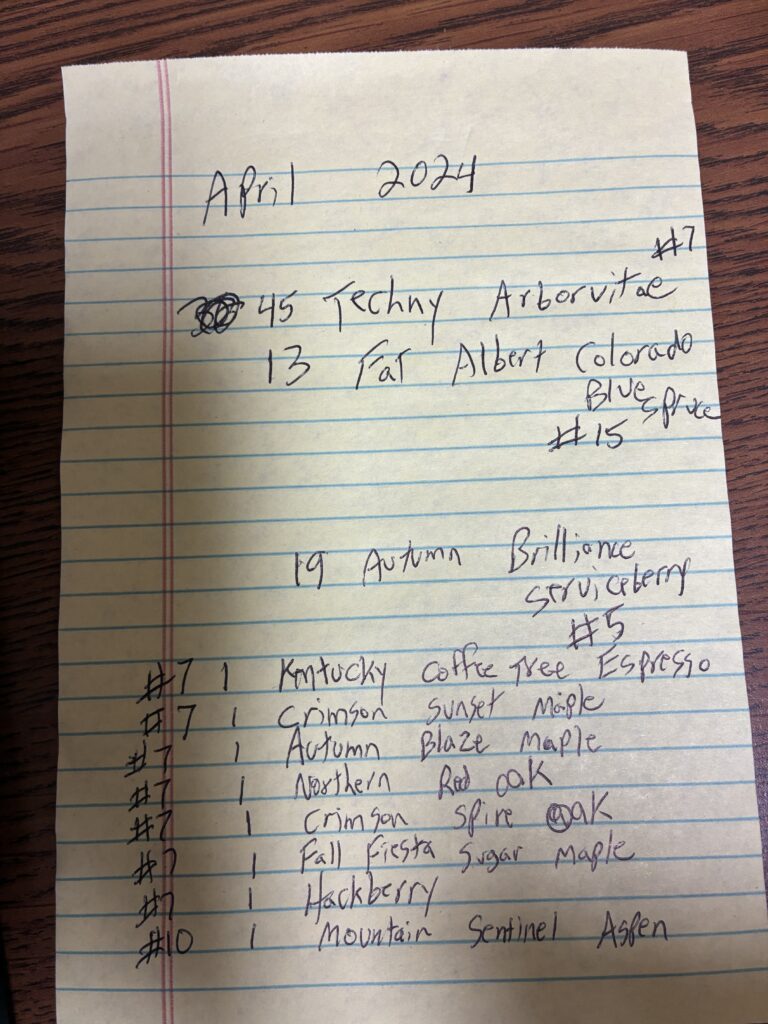
This windbreak was built with a strong evergreen backbone for year-round performance, plus ornamental structure and a diversified mix of shade trees for long-term resilience.
Evergreens (Year-Round Wind Protection + Winter Structure)
- 45 Techny Arborvitae
- 13 ‘Fat Albert’ Colorado Blue Spruce
Ornamental / Multi-Season Interest
- 19 ‘Autumn Brilliance’ Serviceberry
Shade Tree Diversification (Eight Types)
- Mountain Sentinel® Aspen
- Kentucky Coffeetree ‘Espresso’
- Crimson Sunset® Maple
- Autumn Blaze® Maple
- Fall Fiesta® Sugar Maple
- Northern Red Oak
- Crimson Spire™ Oak
- Hackberry
Windbreaks in Numbers (Simple Proof You Can Feel)
A good windbreak isn’t just a landscaping idea—it produces measurable change. Here are a few simple rules of thumb that explain why windbreak trees make such a difference.
1) The “10–20× Height” Shelter Zone
In many landscapes, the sheltered zone extends about 10 to 20 times the height of the trees downwind.
- Trees at 20 feet can help shelter roughly 200–400 feet downwind.
- Trees at 30 feet can influence approximately 300–600 feet downwind.
2) The Right Density Works Better Than a “Wall”
Windbreaks perform best when they slow the wind gradually. A planting that feels filtered—layered evergreens, varied structure, and consistent spacing—reduces wind without creating turbulence.
3) Small Wind Reduction = Big Practical Results
When wind slows down, the benefits stack up quickly:
- Less snow drifting across open stretches
- Less winter exposure around homes, livestock areas, and outbuildings
- Less drying stress on shrubs, young trees, and evergreens
- A noticeably calmer microclimate for gardening and outdoor living
4) A Windbreak Pays Off Early—and Improves for Decades
- Years 1–2: establishment (roots first)
- Years 3–5: noticeable wind reduction and visual screening
- Years 7–10+: strong, mature performance—reliable snow control and shelter
5) Diversity Is Built-In Insurance
Randy’s plan included eight shade tree types, helping reduce long-term risk while keeping the windbreak functional.
Windbreak Design Basics (Simple, Practical, Worth Getting Right)
If you’re considering windbreak trees, you don’t need an engineering degree—but you do need a plan.
Start With Your Wind Direction
In much of Iowa, the strongest winter winds often come from the north and west, so windbreaks are commonly placed to intercept those exposures.
Rows Matter
- 1 row: better than nothing, but limited
- 2–3 rows: ideal for many home and acreage windbreaks
- 3+ rows: best for stronger performance, snow management, and durability
Spacing Is the Difference Between “Planted” and “Planned”
Spacing matters both between trees and between rows. Proper spacing supports airflow, reduces disease pressure, and helps the windbreak function as a filter instead of a wall.
The Biggest Mistakes to Avoid
- Planting too close to driveways/buildings (snow ends up where you don’t want it)
- Relying on one species (higher risk long-term)
- Skipping early care (watering + weed control make or break establishment)
Plan Your Windbreak With Our Planting Calculator
If you’re ready to take the next step, we’ve made planning easier.
On our website, you’ll find a planting calculator designed to help you map out a project like this—so you can estimate what you’ll need and build a plan with confidence (including the pricing we offer at Del’s).
Use Del’s Planting Calculator here
Ready to Plan a Windbreak?
If you’re considering a windbreak for snow control, comfort, privacy, or landscape protection, we can help you design a plan that fits your property and your goals.
Bring one of the following and we’ll get you started:
- A quick sketch of your site
- A phone photo of the area
- Your top goal (snow drifting, wind reduction, privacy, livestock shelter, garden protection)
We’ll help you choose a mix that makes sense—so you’re not just planting trees, you’re building protection.
Contact Us:
Have any questions? Our team is happy to help—whether you’re shopping in person or planning ahead.
Address: 1808 11th St SE #6069, Spencer, IA 51301
Phone: (712) 262-4912
Email: counter@delsgardencenter.com
Stop in, call, or reach out anytime—we’re here to help you grow with confidence, all year long.