
Every time a bee visits a flower, a butterfly drifts through the garden, or a hummingbird stops to feed, they’re doing more than adding beauty to the landscape—they’re helping pollinate the plants that keep our gardens and ecosystems thriving.
Unfortunately, pollinator populations have faced increasing challenges due to habitat loss, pesticide exposure, and changing environmental conditions. The good news is that homeowners can make a real difference. By creating a pollinator garden, you can provide food and habitat for bees, butterflies, hummingbirds, and other beneficial insects while enjoying a landscape full of color and life.
Whether you have a large backyard or a small planting bed, here are five simple steps to creating a successful pollinator garden.
Step 1: Choose the Right Location
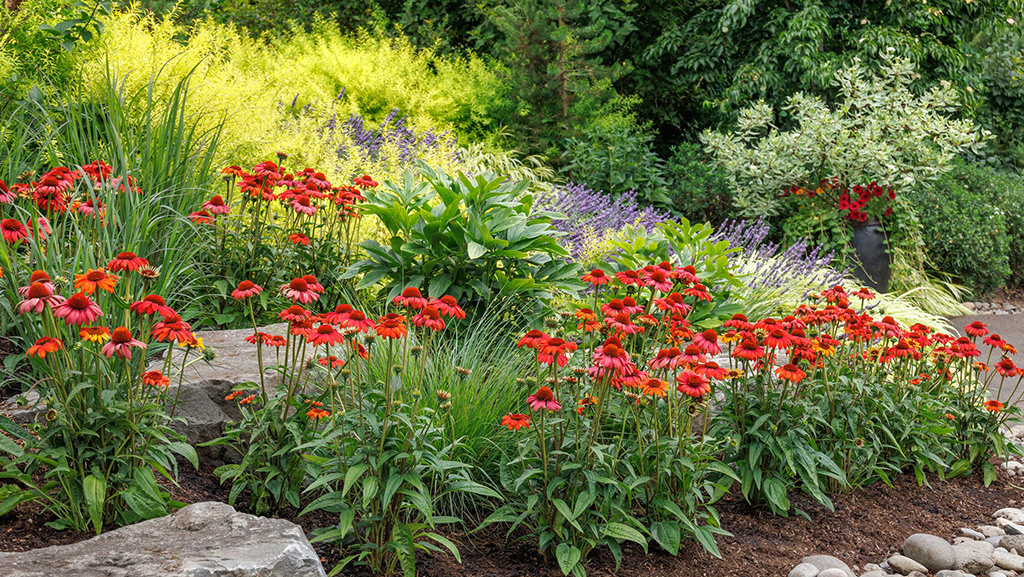
Most pollinator-friendly plants perform best in full sun, so start by selecting an area that receives at least six hours of direct sunlight each day.
While larger gardens can support more pollinators, don’t feel like you need a massive space to get started. A small flower bed, border planting, or even a collection of containers can provide valuable resources for pollinators.
When selecting a location, look for an area that:
- Receives plenty of sunlight
- Has well-drained soil
- Is easy to observe and enjoy
- Can accommodate a variety of flowering plants
Step 2: Plan for Blooms Throughout the Season
One of the biggest mistakes gardeners make is planting flowers that all bloom at the same time.
A successful pollinator garden provides nectar and pollen from spring through fall. By selecting plants with different bloom periods, you can ensure pollinators have a reliable food source throughout the growing season.
Think About Seasonal Color
Spring Bloomers
- Catmint – Soft lavender-blue that creates a cool or calming look
- Allium ‘Millenium’ – Unique globe-shaped purple blooms that stand out in the landscape
- Amsonia – Delicate periwinkle-blue flowers that brighten the garden in late spring
Summer Bloomers
- Butterfly Weed – Vibrant orange flowers that attract monarch butterflies and add bold color
- Bee Balm – Bright red, pink, or purple blooms that are favorites of bees and hummingbirds
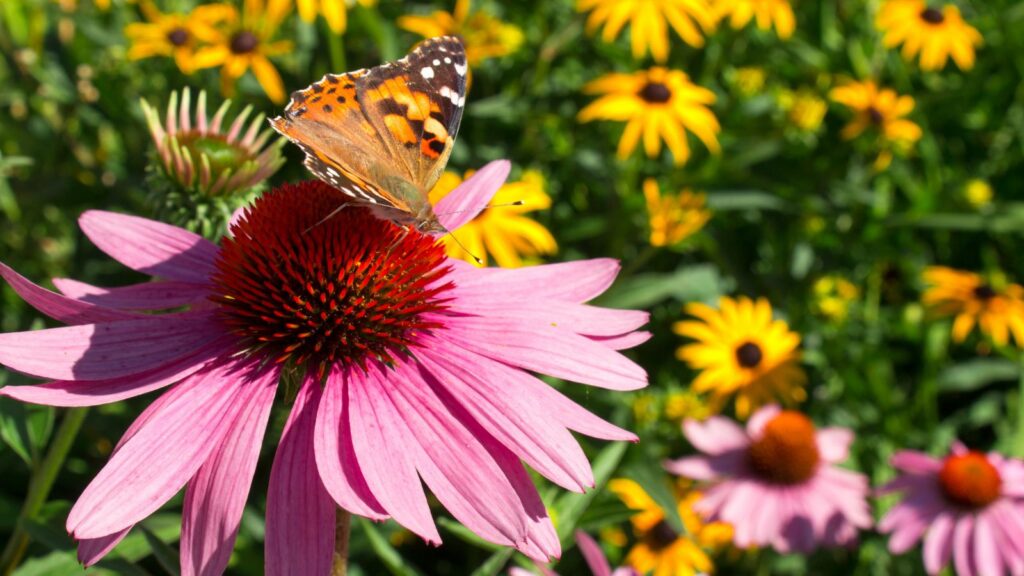
- Coneflower – Large purple-pink flowers that provide color all summer long
- Blazing Star – Tall spike of vivid purple blooms that add vertical interest
Late Summer & Fall Bloomers
- Joe Pye Weed – Large clusters of dusty pink-purple flowers that become a pollinator hotspot
- Purple Dome Aster – Masses of bright purple blooms that shine when many summer flowers begin to fade
- Sedum Autumn Fire – Rosy pink flower heads that deepen in color as fall approaches
This succession of blooms not only supports pollinators but also keeps your garden looking attractive throughout the growing season
Step 3: Include a Variety of Pollinator-Friendly Plants
Different pollinators are attracted to different flower shapes, colors, and bloom times. The more diversity you include, the more wildlife you’ll support.
Plants for Monarch Butterflies
If helping monarch butterflies is a priority, milkweed should be at the top of your planting list. Monarch caterpillars rely exclusively on milkweed as their host plant, making it one of the most important additions to a pollinator garden.
Consider planting:
- Butterfly Weed (Asclepias tuberosa)
- Swamp Milkweed (Asclepias incarnata)
Both produce beautiful blooms while providing critical habitat for monarchs.
Plants for Bees
Bees are among the most effective pollinators in the garden and are attracted to nectar-rich flowers.
Great choices include:
- Bee Balm (Monarda)
- Blazing Star (Liatris)
- Salvia
- Allium ‘Millenium’
Plants for Butterflies
Butterflies are drawn to colorful flowers with easy access to nectar.
Some favorites include:
- Coneflower
- Black-Eyed Susan
- Joe Pye Weed
- Zinnia
Plants for Hummingbirds
Hummingbirds prefer tubular flowers that provide abundant nectar.
Try adding:
- Rockin’ Salvia
- Agastache ‘Blue Fortune’
- Monarda varieties
By combining several of these plants, you’ll create a garden that attracts a wide variety of pollinators throughout the season.
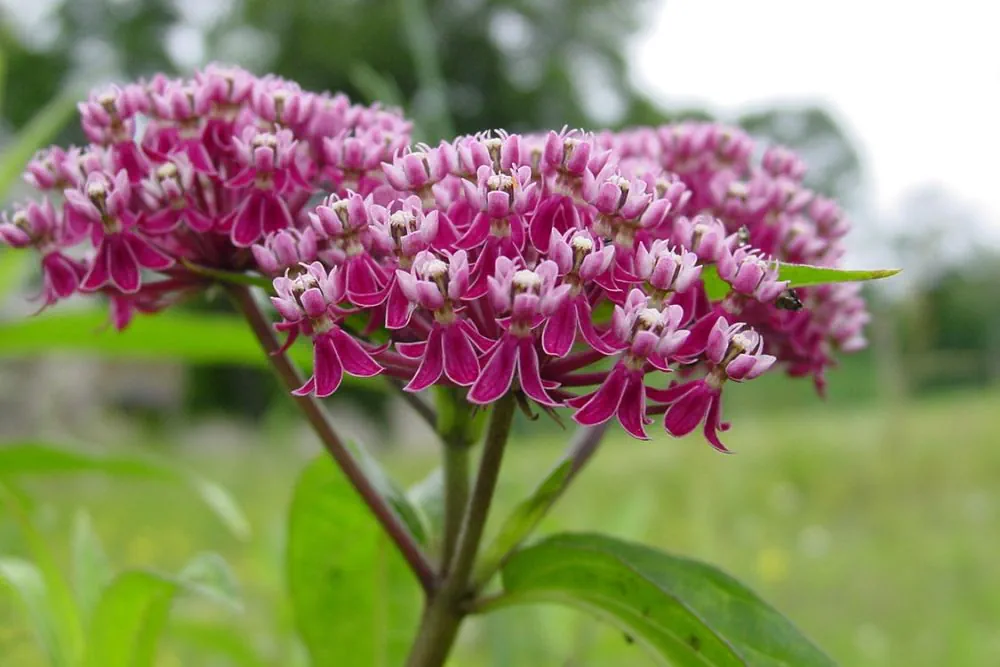
The Milkweed Attracts an abundance of Monarch Butterflies
Create a Pollinator-Friendly Habitat
Flowers are important, but pollinators need more than nectar.
Many pollinators benefit from access to water, shelter, and nesting areas. A shallow birdbath with stones for landing spots can provide a safe water source during hot summer weather.
Other ways to support pollinators include:
- Planting flowers in clusters rather than individually
- Leaving some natural areas undisturbed
- Using mulch to help retain moisture
- Providing a variety of plant heights and structures
Small changes like these can make your garden significantly more attractive to beneficial insects and wildlife.
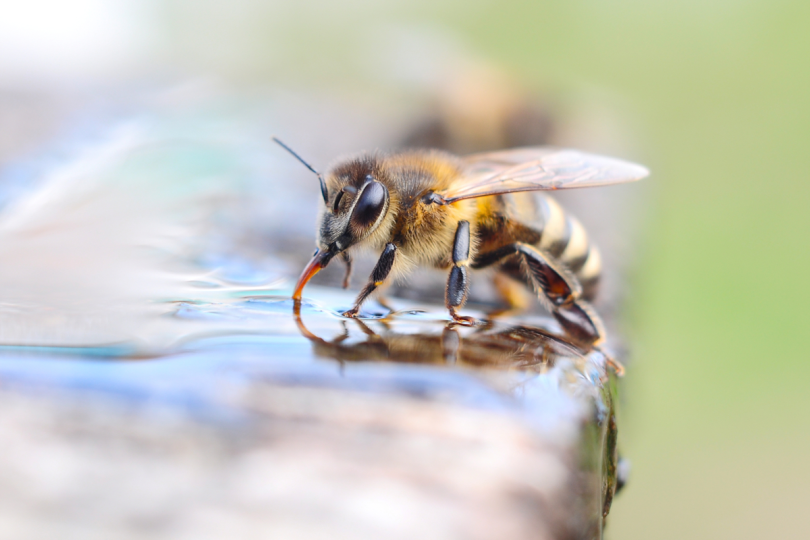
Bee’s with a water source are more likely to pollinate your garden
Step 5: Reduce Pesticide Use Whenever Possible
One of the simplest ways to help pollinators is to be mindful of pesticide use.
While there are times when treatment may be necessary, broad-spectrum insecticides can affect beneficial insects along with garden pests. Whenever possible, consider alternative solutions such as hand-removing pests, improving plant health, or using targeted treatments only when needed.
Creating a healthy, diverse garden often helps establish a natural balance that supports beneficial insects while reducing pest pressure over time.
Native Plants vs. Nativars: What’s the Difference?
As you research pollinator plants, you’ll likely come across the terms native plant and nativar.
Native plants occur naturally within a region and have evolved alongside local wildlife and pollinators. Because they’re adapted to Iowa’s climate, they are often resilient, low-maintenance choices for the landscape.
Nativars are cultivated varieties of native plants that have been selected for traits such as flower color, compact growth, or disease resistance. Many continue to provide benefits for pollinators while offering gardeners additional options for specific landscape needs.
Both can play valuable roles in a pollinator garden.
Bee a Winner with Monrovia
Pollinator gardening continues to grow in popularity, and one of our supplier companies – Monrovia – is helping raise awareness through programs like their annual Bee a Winner campaign.
Every year through June 15, gardeners can enter Monrovia’s nationwide photo contest for a chance to win a $500 Monrovia shopping spree at a participating garden center. To enter, simply snap a photo of your favorite pollinator plant, pollinator garden, or a Bee a Winner display at your local garden center and share it on Instagram. Be sure to tag @monroviaplantsand include #BeeAWinner in your caption to qualify for the giveaway.
The contest is designed to showcase the gardens, plants, and pollinators that make our outdoor spaces come alive. Whether you’ve just planted your first milkweed or you’ve spent years creating a pollinator paradise, it’s a great opportunity to share your garden with other plant enthusiasts and potentially win plants for next year’s projects.
While you’re planning your garden, be sure to explore Monrovia’s selection of pollinator-friendly shrubs and perennials. Many of their varieties provide long-lasting blooms that help support bees, butterflies, hummingbirds, and other beneficial pollinators throughout the growing season.
If you’re interested, learn more here – https://go.monrovia.com/bee-a-winner
Start Small and Grow Over Time
Creating a pollinator garden doesn’t have to happen all at once.
Start with a sunny location, select a few plants that bloom at different times of the year, and focus on creating a welcoming habitat for pollinators. Even a small planting can provide meaningful benefits for bees, butterflies, hummingbirds, and other beneficial insects.
Over time, you’ll not only support local pollinator populations—you’ll create a beautiful, vibrant garden filled with color, movement, and life throughout the growing season.